

2026-08-15
The infrastructure of modern industrial automation relies on a complex network of "nerves"—high-performance cables designed to withstand conditions that would cause standard consumer-grade wiring to fail instantly. When engineering teams or procurement specialists seek a custom industrial cable manufacturer, they aren't just looking for a vendor; they are looking for a technical partner capable of navigating the intersection of material science, electrical engineering, and regulatory compliance.
Industrial environments demand cables that can endure extreme temperatures, continuous mechanical stress, chemical exposure, and electromagnetic interference (EMI). Understanding the technical landscape of this manufacturing sector is essential for ensuring system uptime and operational safety.
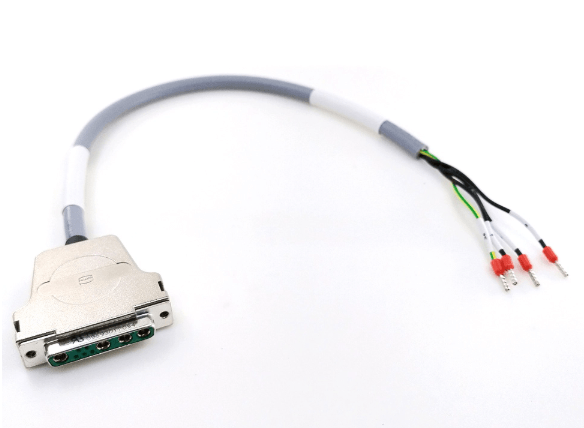
Unlike commodity cable producers who focus on high-volume, standardized products like Ethernet or basic power cords, a custom industrial cable manufacturer specializes in "application-specific" engineering. These manufacturers possess the R&D capabilities to modify every layer of a cable’s construction—from the conductor alloy to the outer jacket material—to meet the precise needs of a unique environment.
For instance, a manufacturer like Soar Cable, which brings over 20 years of expertise to the field, emphasizes a rigorous R&D process to solve specific industrial challenges. This often involves designing cables for "high-flex" applications in robotics or "low-smoke zero-halogen" (LSZH) cables for confined transit environments.
To evaluate the capabilities of a manufacturer, one must understand the variables they control during the production process. A true custom manufacturer provides a wide array of options across these four primary categories:
The conductor is the heart of the cable. While copper is the standard, custom manufacturers offer various grades and coatings:
Insulation protects the signal and the conductor. The choice of polymer depends heavily on the thermal and chemical environment:
In a factory floor crowded with motors and VFDs (Variable Frequency Drives), electromagnetic interference is a constant threat. A custom industrial cable manufacturer will employ various shielding techniques:
The jacket must withstand the external "abuse" of the industrial site. Common choices include Polyurethane (PUR) for abrasion and oil resistance, or Thermoplastic Elastomer (TPE) for extreme flexibility in cold weather.
| Feature | Standard Industrial Cable | Custom Engineered Cable |
|---|---|---|
| Flex Life | Static or limited movement | Multi-million cycle torsion/bend rating |
| Chemical Resistance | Basic oils/water | Specific resistance to acids, fuels, or coolants |
| Temperature Range | Typically -20°C to +80°C | Engineered for -65°C to +250°C+ |
| EMI Protection | Standard foil or braid | Optimized multi-layer shielding systems |
| Form Factor | Fixed diameters | Specialized shapes (flat, coiled, or hybrid) |
A manufacturer’s expertise is best demonstrated by how they solve environmental challenges. When discussing a project with an industrial cable manufacturer, the design logic typically follows the specific stresses of the application.
In robotic arms, cables undergo constant "torsion" (twisting) and "flexing" (bending). A custom manufacturer will design a cable with a shorter "lay length"—the distance it takes for a wire to wrap 360 degrees around the cable core. This reduces internal stress and prevents the "corkscrewing" effect that leads to premature cable failure.
Cables for solar farms or wind turbines face UV radiation, ozone, and extreme temperature cycling. Manufacturers utilize UV-stabilized jackets and moisture-blocked conductors to prevent "wicking," where water travels through the cable strands and corrodes internal components.
These environments require biocompatibility and resistance to sterilization processes like autoclaving or chemical wipe-downs. Here, manufacturers focus on USP Class VI materials and high-durability jackets that won't degrade under harsh disinfectants.
In the industrial sector, a cable is only as good as its certifications. A reputable custom industrial cable manufacturer operates under a strict Quality Management System (QMS), typically ISO 9001. However, product-specific certifications are what guarantee safety and interoperability:
Manufacturers like Soar Cable leverage these certifications alongside advanced testing equipment—such as aging ovens, flame retardant testers, and salt spray chambers—to validate that every custom batch meets the theoretical design specs.
Understanding the manufacturing workflow helps engineers plan their project timelines more effectively.
Selecting a custom industrial cable manufacturer is a strategic decision that affects the reliability of the entire industrial system. By focusing on material science, specific application stressors, and rigorous certification standards, buyers can move beyond price-per-meter metrics and focus on the Total Cost of Ownership (TCO). A well-engineered custom cable may cost more upfront but prevents the catastrophic costs of unplanned downtime and safety failures.


