2026-10-22
The modern vehicle is essentially a high-performance computer on wheels, housing dozens of Electronic Control Units (ECUs) that manage everything from fuel injection to advanced driver-assistance systems (ADAS). To access this data, the physical link—the automotive diagnostic cable—serves as the critical bridge between the vehicle’s internal communication network and external diagnostic hardware. While the industry has moved toward standardization, the complexity of vehicle architectures means that a "one-size-fits-all" cable is often a myth in professional environments.
Understanding the various automotive diagnostic cable types requires a look at both the physical connector interface and the underlying communication protocols. For engineers and technicians, selecting the correct cable is not just about the fit; it is about signal integrity, data transfer speed, and protecting the vehicle’s sensitive electronics from voltage spikes.
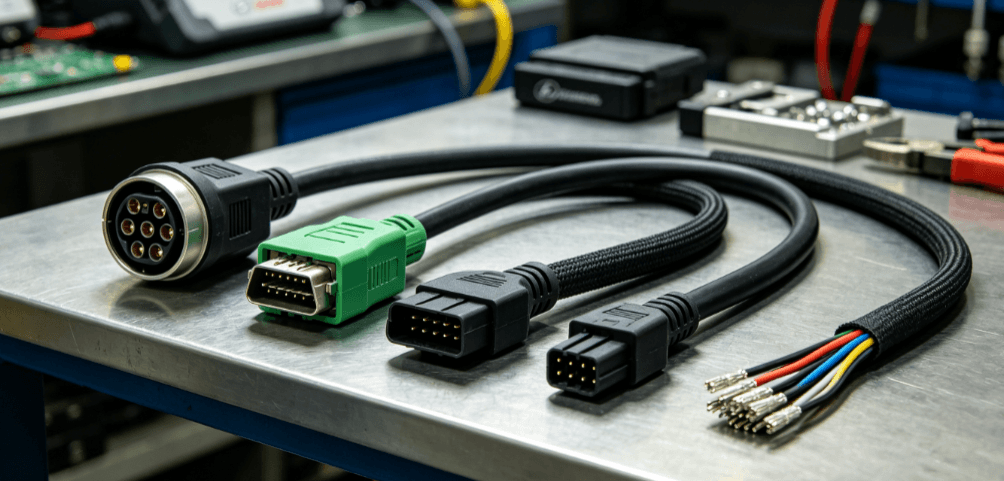
The most recognized automotive diagnostic cable is the OBD-II cable, standardized under SAE J1962. Mandated for all cars sold in the United States since 1996 and Europe (EOBD) since 2001, this 16-pin connector provides a universal gateway for emissions-related data and basic engine diagnostics.
The OBD-II cable utilizes several protocols, including CAN Bus (ISO 15765), K-Line (ISO 9141-2), and PWM/VPW (SAE J1850). While the physical shape of the connector is identical across brands, the internal pin population often varies. Professional-grade cables, such as those engineered by Soar Cable, prioritize high-quality copper conductors and shielding to prevent electromagnetic interference (EMI) from disrupting the high-speed CAN signals during critical ECU reflashing procedures.
Despite the ubiquity of OBD-II, many manufacturers—particularly in the luxury and heavy-duty sectors—rely on proprietary cable types to access deep-level systems like transmission control, airbag modules, or infotainment coding.
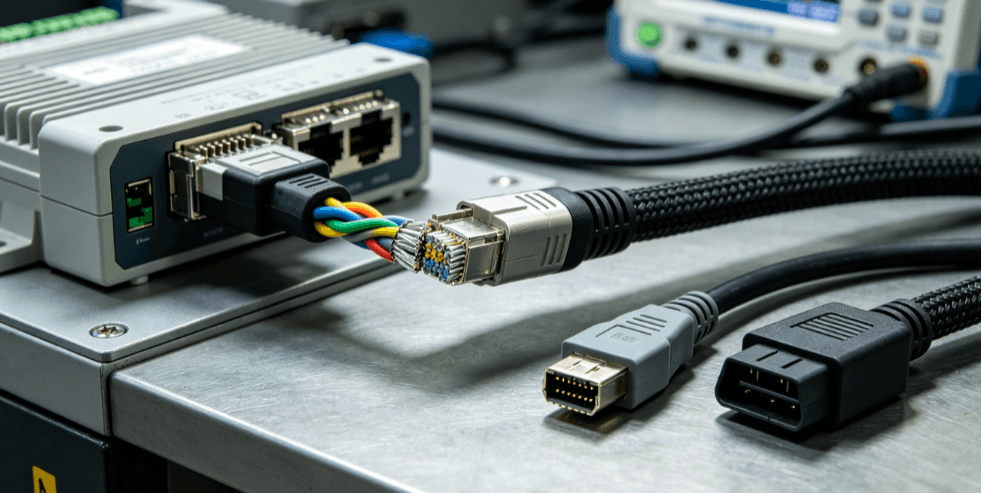
BMW’s evolution reflects the broader industry shift. Older models (E-series) typically utilize K-DCAN cables, which communicate via the K-line or high-speed CAN. However, newer F, G, and I-series models require ENET (Ethernet) cables. These utilize an RJ45 connector on one end and a 16-pin OBD-II on the other, allowing for the massive bandwidth required to update navigation maps or flash large firmware files.
Older Mercedes-Benz vehicles used a circular 38-pin connector located in the engine bay, requiring a specific adapter cable to interface with standard multiplexers. Modern Mercedes vehicles have moved toward Diagnostics over IP (DoIP), which utilizes specialized Ethernet-based cables to handle the complex data routing of the MBUX infotainment systems.
The Volkswagen Audi Group (VAG) uses specialized interfaces often referred to by the software they support, such as VCDS. These cables must handle dual K-lines in older models and high-speed CAN-FD (Flexible Data-rate) in the latest MQB platform vehicles. The cable quality is paramount here, as timing latencies in the cable can lead to "bricked" ECUs during coding.
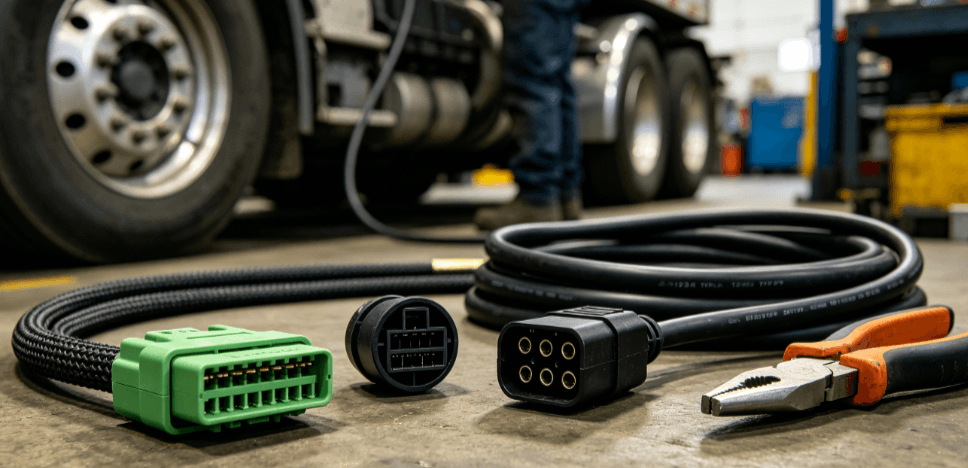
The diagnostic requirements for trucks and construction equipment differ significantly from passenger cars. These vehicles typically use circular Deutsch connectors, which are designed for harsh environments where vibration, oil, and moisture are constant factors.
| Cable Type | Standard/Brand | Common Pin Configuration | Typical Application |
|---|---|---|---|
| J1939 | Heavy-Duty Trucks | 9-Pin (Green or Black) | Cummins, Freightliner, Paccar |
| J1708 | Older Commercial | 6-Pin | Legacy Mack and Volvo Trucks |
| 14-Pin | Mercedes/Setra | Circular 14-Pin | Commercial Buses and Vans |
| 12-Pin | MAN/Renault | Industrial 12-Pin | European Heavy-Duty Engines |
These cables require industrial-grade TPU (Thermoplastic Polyurethane) jacketing to withstand the mechanical stress of a workshop floor. The internal wiring must also be twisted-pair for CAN lines to maintain impedance and ensure error-free communication.
As vehicles move toward autonomous driving and integrated 5G connectivity, the traditional CAN bus (which operates at roughly 500 kbps) is no longer sufficient. This has led to the adoption of Diagnostics over IP (DoIP) based on ISO 13400.
DoIP cables are essentially ruggedized Ethernet cables. They allow for data transfer speeds of up to 100 Mbps, which is necessary for calibrating ADAS cameras or downloading gigabytes of telematics data. For manufacturers and OEM suppliers, the challenge lies in producing DoIP cables that maintain signal integrity over longer distances while using automotive-grade connectors that can survive thousands of mating cycles.
When evaluating automotive diagnostic cable types, technical specifications often reveal the difference between a consumer-grade tool and an industrial-grade component.
For specialized vehicle manufacturers or fleet management companies, off-the-shelf cables often fall short. Custom cable assemblies allow for the integration of specific resistors, unique pinouts, or specialized branching (Y-cables) that enable simultaneous data logging and diagnostic access.
Companies like Soar Cable specialize in these high-precision automotive applications, bridging the gap between standard protocols and proprietary hardware requirements. By focusing on durability and signal accuracy, these industrial-grade cables ensure that the diagnostic data being read is a true reflection of the vehicle's health.