2026-09-15
Modern vehicles are more than just mechanical machines; they are sophisticated mobile computers. At the heart of this digital transformation is the automotive wiring harness. Often described as the "central nervous system" of a car, it is an organized set of wires, terminals, and connectors that runs throughout the entire vehicle. Its primary job is to relay information and electric power, bridging the gap between various components like the battery, sensors, and electronic control units (ECUs). Without a functioning harness, a vehicle cannot start, signal a turn, or even manage fuel consumption effectively.

A car wiring harness works by creating a unified network that allows electrical energy and data signals to travel between various points of the vehicle. Instead of running individual wires for every single component—which would lead to a chaotic and heavy mess of cables—manufacturers bundle these wires into a structured system. This bundling uses specialized insulation and protective sleeves to withstand the harsh conditions of an engine bay or undercarriage.
The functioning logic relies on two distinct flows:
By integrating these flows into a single harness, the vehicle achieves a "closed-loop" system. This ensures that every command—from pressing a window button to stepping on the brake—is executed with millisecond precision.
To understand how the system works, one must look at the individual components that make up the assembly. Each part is engineered to meet specific automotive standards (such as SAE or ISO) to ensure safety and durability.
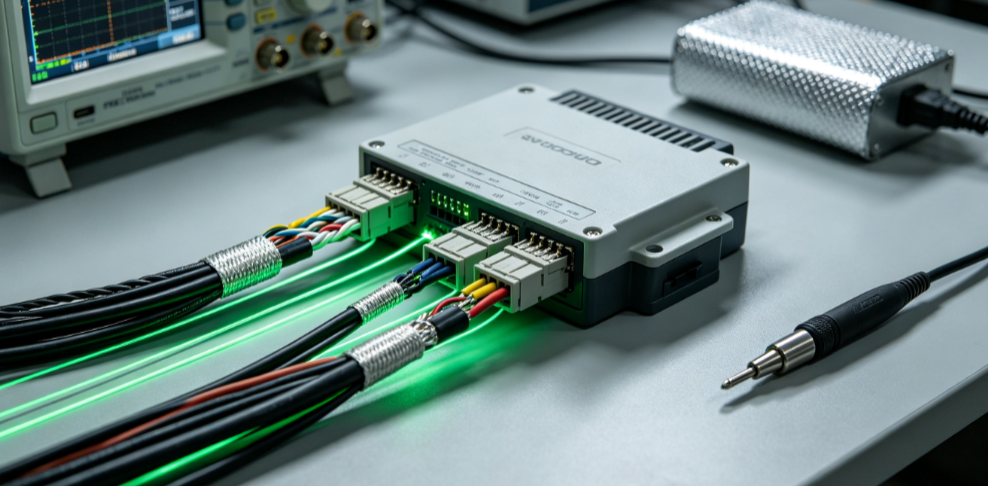
In older vehicles, wiring was "point-to-point," meaning every switch was directly connected to its load. However, modern vehicles use a much more efficient method: the CAN Bus (Controller Area Network) system.
The CAN Bus allows multiple microcontrollers to communicate with each other without a host computer. For example, when you lock your car doors, the signal travels along a "data highway" shared by other systems. The door lock actuator only "listens" for the specific code meant for it. This drastically reduces the amount of copper wire required, which lowers the vehicle's total weight and improves fuel efficiency.
Manufacturers must ensure that these signal wires are twisted or shielded. Shielding prevents electromagnetic interference (EMI) from the engine’s ignition system or mobile devices from corrupting the data flow. If the signal integrity is compromised, the vehicle may display "ghost" fault codes or experience intermittent performance issues.
A car wiring harness does not operate in a vacuum. It must perform reliably while subjected to extreme stress. Engineers categorize these stresses into three main areas:
1. Thermal Management
Engine bays can reach temperatures exceeding 125°C (257°F). Wiring harnesses must be rated for these temperatures to prevent the insulation from melting and causing a short circuit. Conversely, in cold climates, the harness must remain flexible enough not to crack.
2. Vibration and Mechanical Stress
Vehicles are constantly in motion. Terminals and connectors must be crimped with high precision to ensure that vibration doesn't loosen the connection over time. This is why industrial-grade crimping tools and ultrasonic welding are often used in the manufacturing process.
3. Chemical and Moisture Resistance
Harnesses are frequently exposed to oil, coolant, brake fluid, and road salt. High-quality harnesses utilize specialized grommets and sealed connectors (like those with IP67 or IP69K ratings) to keep moisture out of the electrical contact points.
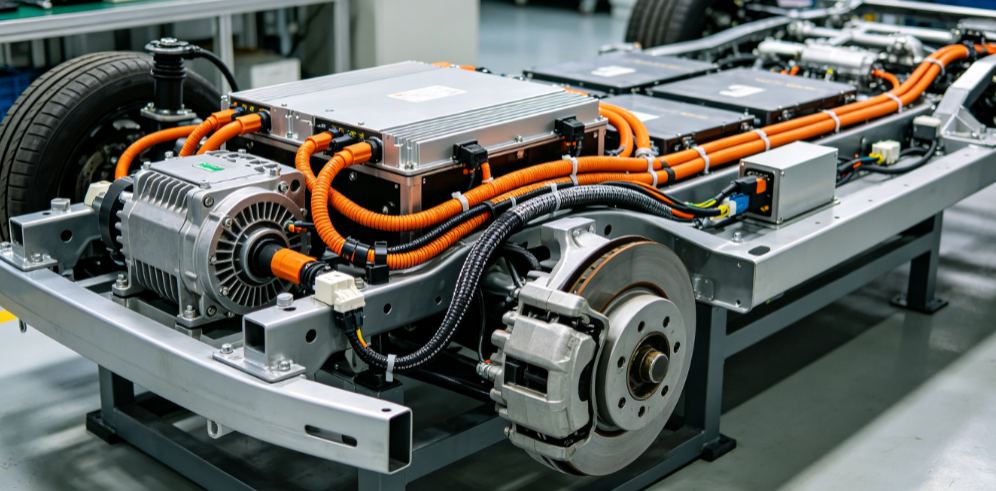
As the industry shifts toward Electric Vehicles (EVs), the way a wiring harness works is changing. Unlike traditional internal combustion engines that rely on 12V or 24V systems, EVs use high-voltage harnesses (often 400V to 800V) to connect the battery pack to the inverter and motor.
These high-voltage systems require significantly thicker cables and specialized orange-colored insulation for safety identification. They also require advanced electromagnetic shielding to protect the low-voltage communication lines from the massive electrical noise generated by the drive motors.
When assessing the quality of a wiring harness, technical experts look at "voltage drop" and "continuity." A well-designed harness minimizes resistance. Even a small amount of corrosion at a terminal can increase resistance, leading to a voltage drop that prevents a sensor from reading accurately.
Companies focused on high-precision cable solutions, such as those found on the Soar Cable platform, prioritize material purity and terminal plating (often using tin, silver, or gold) to ensure long-term conductivity. These manufacturing choices are what separate a standard aftermarket part from an OEM-grade assembly capable of lasting the entire lifespan of the vehicle.