

2026-09-15
The complexity of modern vehicle telematics demands more than just reliable wiring; it requires a foolproof system to prevent assembly errors. This is where FAKRA (Fachnormenausschuss Kraftfahrzeugindustrie) connectors become critical. Standardized under ISO 20860-1 and USCAR-18, these connectors utilize a sophisticated color-coding and mechanical keying system to ensure high-speed RF signals reach the correct modules without cross-connection.
For engineers and OEM project managers, understanding the mapping of these colors is essential for maintaining signal integrity in GPS, cellular, and ADAS environments.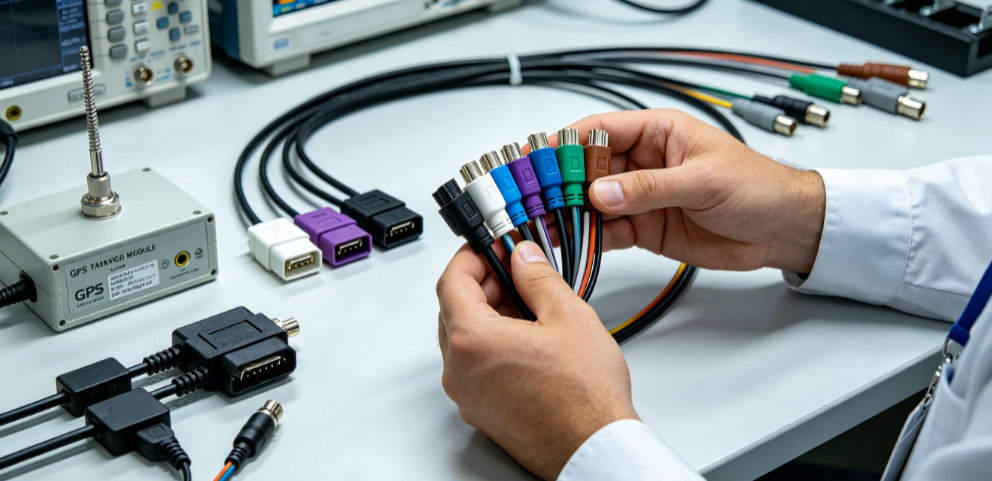
FAKRA connectors are essentially modified SMB (SubMiniature version B) coaxial connectors housed within a protective plastic shell. The "Color Code" refers to the visual identity of this shell, but the technical intelligence lies in the "Keying."
Each color corresponds to a unique mechanical rib configuration. A "Code A" (Black) male connector will only fit into a "Code A" female housing. This physical lockout mechanism is vital on high-volume assembly lines where technicians may handle dozens of similar-looking RF cables simultaneously. Without these keys, a GPS antenna could accidentally be plugged into a terrestrial radio port, leading to system failure or hardware damage.
The following table outlines the standardized color codes used across the automotive industry to designate specific signal paths.
| Code | Color | Application | Typical Frequency Range |
|---|---|---|---|
| A | Deep Black | AM/FM Radio (Non-Phantom) | < 100 MHz |
| B | Cream White | AM/FM Radio (Phantom Power) | < 100 MHz |
| C | Signal Blue | GPS / Navigation / GNSS | 1.2 – 1.6 GHz |
| D | Bordeaux Violet | GSM / Cellular / LTE | 800 MHz – 2.1 GHz |
| E | Leaf Green | TV / Satellite Video | 170 – 800 MHz |
| F | Brown | Remote Keyless Entry (RKE) | 315 – 433 MHz |
| G | Gray | Bluetooth / WLAN / Wi-Fi | 2.4 GHz |
| H | Violet | Dedicated Short Range Comm (DSRC) | 5.8 – 5.9 GHz |
| I | Beige | Digital Radio (SDARS/SiriusXM) | 2.3 GHz |
| K | Curry | SiriusXM / Satellite Radio | 2.3 GHz |
| L | Carmine Red | Reserved / Custom Specific | N/A |
| M | Pastel Orange | Reserved / Custom Specific | N/A |
| N | Pastel Green | Reserved / Custom Specific | N/A |
| Z | Water Blue | Universal / Neutral Keying | Testing & Prototyping |
In professional RF testing and prototyping, "Code Z" is the outlier. Often referred to as "Water Blue" or "Neutral Keying," this specific housing is designed without restrictive mechanical ribs.
A Code Z female connector can mate with any male FAKRA connector regardless of its color code. This is indispensable during the R&D phase or for diagnostic tools, allowing engineers to tap into any RF line without needing a full set of 14 different adapter cables. However, Code Z is strictly prohibited in final vehicle assembly because it bypasses the error-proofing benefits of the standard keying system.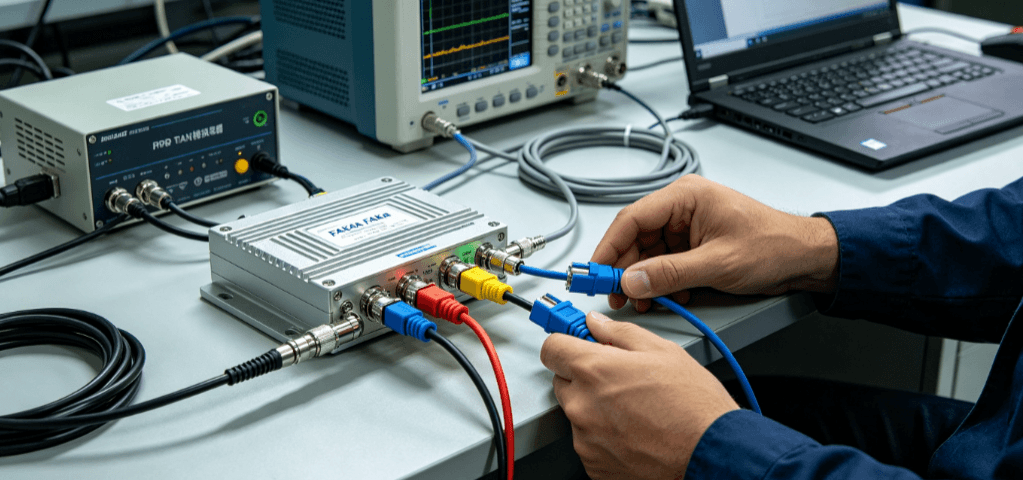
From a manufacturing standpoint, the plastic housing is typically molded from high-performance polymers like PBT (Polybutylene Terephthalate) or PA66 (Polyamide). These materials are selected for:
The internal coaxial component—the actual SMB connector—is usually made of gold-plated brass or beryllium copper to maintain a 50-ohm impedance. While the color coding handles the "where," the internal metal precision handles the "how well."
As vehicles move toward autonomous driving and V2X (Vehicle-to-Everything) communication, the demand for higher data rates is pushing standard FAKRA to its limits. Traditional FAKRA connectors usually support up to 6 GHz.
For projects requiring higher frequencies or smaller footprints, engineers often look toward "Mini-FAKRA" (HFM - High-Speed FAKRA-Mini). These maintain the color-coding logic but offer up to 20 GHz bandwidth and a significantly reduced PCB footprint.
When sourcing components, it is vital to ensure that the supplier adheres strictly to the ISO 20860-2 performance standards, which cover the electrical and mechanical testing of these interfaces. For instance, Soarcable’s FAKRA connector series provides the full spectrum of ISO-standardized color codes, ensuring that each variant meets the specific mating cycles and pull-out forces required for Tier-1 automotive integration.
While the color code identifies the application, it does not guarantee signal quality if the termination is poor. Effective FAKRA implementation requires:
By aligning the correct color code with high-quality manufacturing standards, OEM project managers can eliminate assembly errors while ensuring the long-term reliability of the vehicle’s communication backbone.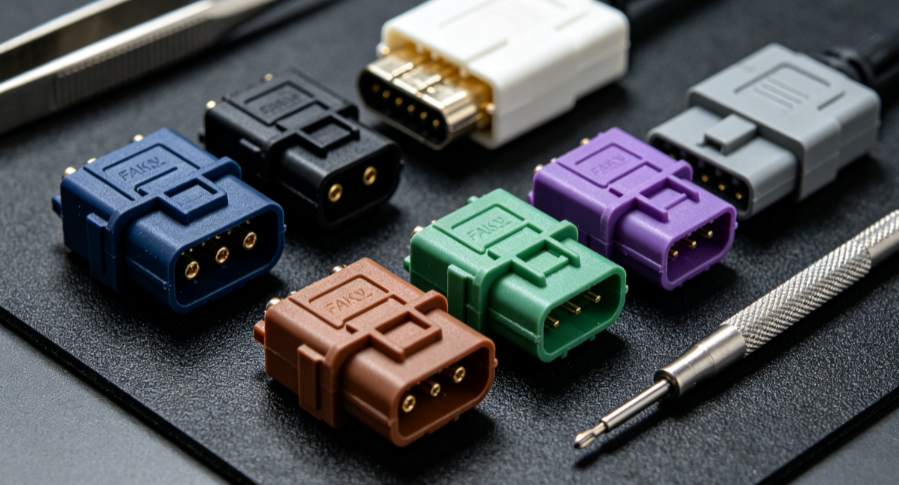
Q: Can I use a Blue (Code C) connector for a GPS antenna if my cable is Bordeaux (Code D)?
A: No. Physically, the mechanical keying will prevent the Code C housing from clicking into a Code D port. This is an intentional design feature to prevent "mismating" during assembly.
Q: What is the difference between FAKRA Code A and Code B if they are both for Radio?
A: Code A is used for standard AM/FM radio signals. Code B is specifically for systems using "Phantom Power," where the center conductor carries both the RF signal and the DC power required to run a remote antenna amplifier.
Q: Are FAKRA color codes universal across all car manufacturers?
A: Yes, the color coding and mechanical keying are defined by international standards (ISO 20860-1). While some OEMs might have very specific custom colors for proprietary internal systems (like Codes L, M, or N), the primary colors (A through K and Z) are industry-wide standards.
Q: Why is Code Z (Water Blue) so common in aftermarket diagnostic tools?
A: Code Z is a "universal" key. It allows a single diagnostic tool or bypass cable to connect to any FAKRA port on a vehicle, saving technicians from carrying a different cable for every possible color-coded port.


